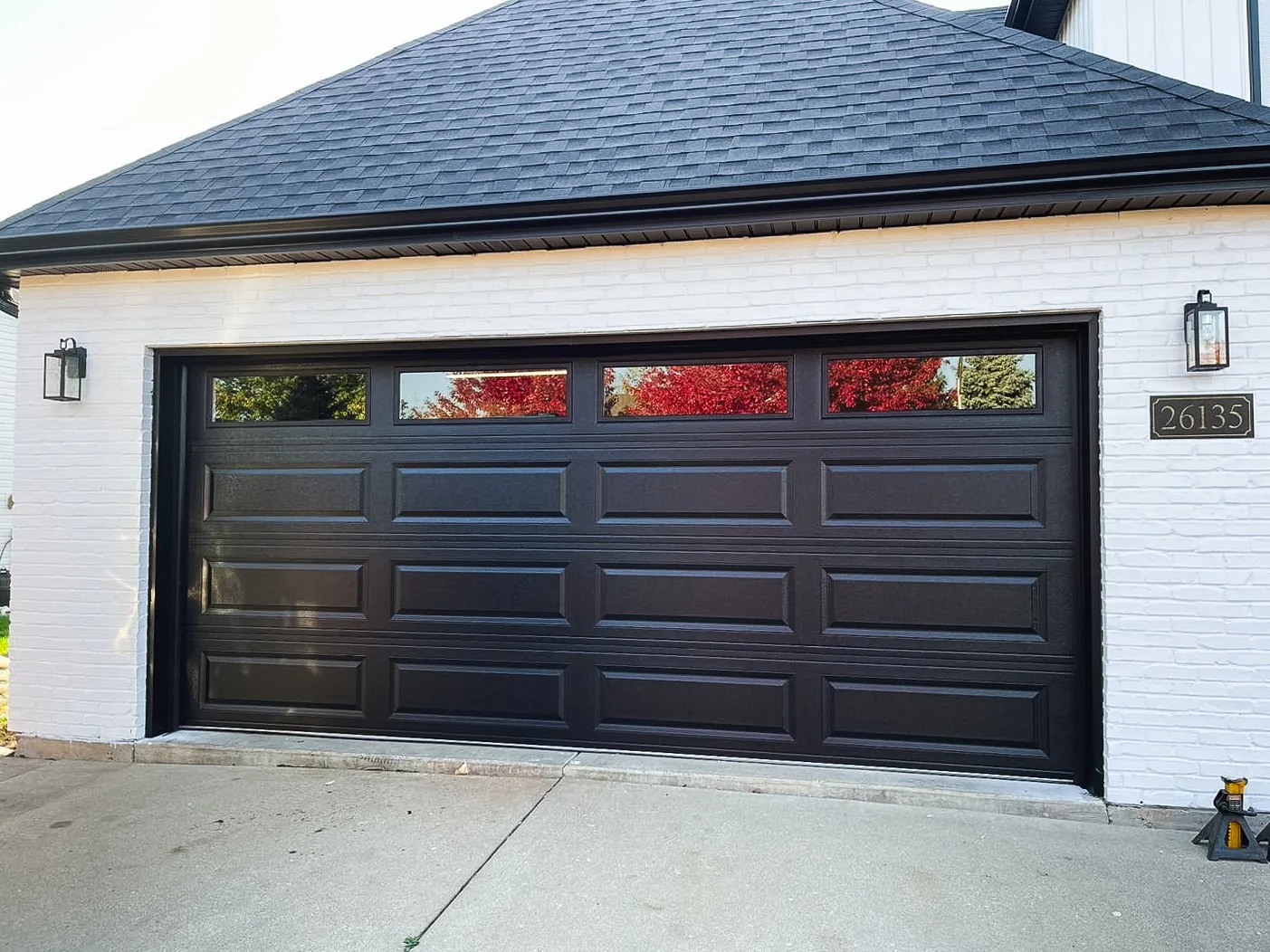
A standard residential garage door weighs between 130 and 350 pounds. The variance is wide because material, size, and insulation all push the number around. This guide gives you the typical weights, why they matter, and a simple way to weigh your own door if it's about to get a new spring.
Why does weight matter?
If you are replacing your garage door's torsion springs, knowing the door's weight is crucial to choosing the right springs. Different torsion springs can handle different amounts of weight. Having torsion springs that can handle a lot more than your garage door weighs is fine. However, installing torsion springs that can't handle your door's weight is dangerous.
Another instance where knowing a door's weight is important is if you're shopping for a new door. If you want to use your current automatic opener, you need to ensure your opener can handle the new door.
Three reasons total to care:
- Spring sizing. Torsion springs are matched to the door's weight. Putting a 140-lb spring on a 200-lb door means the door slams down or the spring breaks early. Spring failure is the most common service call we run; the wrong spring is one of the most common reasons for repeat failure.
- Opener selection. Most ½ HP openers handle doors up to ~300 lbs comfortably. Heavier wood doors usually want a ¾ HP or 1 HP unit, or a direct-drive jackshaft mounted to the side.
- DIY safety. If a spring breaks, the door is no longer counterbalanced. Suddenly you're trying to lift the full weight by hand — and 250+ lbs is the kind of weight that puts people in the ER.
What impacts the weight of a garage door?
Several things can push a garage door's weight up or down:
- Doorway size — the larger the doorway, the heavier the door.
- Materials used — glass garage doors are much heavier than aluminum or hollow steel; solid wood is the heaviest of all.
- Insulation — adds 20–40 lbs on a typical 16x7 door (more on heavily insulated commercial doors).
- Doorway thickness — the thicker the panel section, the heavier the door.
- Type of door — the design (carriage-house, raised panel, full-view glass) impacts overall mass.
- Amount of steel used — more steel = heavier; high-gauge thin steel keeps weight down.
Typical weights at a glance
Sizes here are nominal (8x7, 16x7) — actual width is usually 8'2" and 16'2" to fit the rough opening.
- 8x7 single-car steel, non-insulated: 80–100 lbs
- 8x7 single-car steel, insulated: 100–130 lbs
- 9x7 single-car steel, insulated: 110–145 lbs
- 16x7 double-car steel, non-insulated: 130–155 lbs
- 16x7 double-car steel, insulated: 155–180 lbs
- 16x7 double-car wood: 250–400 lbs
- 16x7 carriage-house wood (custom): 350–500+ lbs
By material
Steel
Most modern doors. Pressed steel panels with optional polystyrene or polyurethane foam insulation. Light, durable, lowest maintenance. Steel doors land in the 100–180 lb range for typical residential sizes.
Aluminum
Less common. Often used for full-view glass-and-aluminum doors (the modern industrial look). Aluminum frames are lighter than steel but the glass adds weight back. A 16x7 full-view glass aluminum door usually runs 200–280 lbs.
Wood
Traditional, custom, and carriage-house doors. Real wood is heavy — solid cedar or mahogany sections can weigh 30–50 lbs each, and a typical 4-section 16x7 wood door is 250–400 lbs. Wood-look composite doors (wood-look composite, for example) are lighter — typically 170–230 lbs — because the panel is foam with a wood-grain wrap.
Fiberglass & vinyl
Coastal applications mostly. Lighter than steel — 80–140 lbs — but not common in Atlanta.
How to weigh your door
The easy method works on any door with the spring already broken (so the opener is disconnected and the door is fully manual):
- Buy or rent a bathroom scale rated to at least 350 lbs (or use two stacked).
- Disconnect the opener (red cord).
- With the door fully closed, lift the door by the bottom edge until it's about 1 foot off the ground. Have a helper slide the scale under one corner.
- Slowly let the door rest on the scale.
- Read the scale, then double the number (since one corner = half the weight).
If the spring is intact and you just want a rough estimate, the table above is accurate within ~15% for any factory-spec door.
Why springs care about weight
Springs are sized by inch-pounds of torque per turn. The right spring lifts the door's exact weight with the right number of winding turns. Get it wrong and:
- Spring too light — door is heavy to lift, opener strains, motor burns out faster, spring breaks early.
- Spring too heavy — door floats up on its own when manually lifted, opener has trouble closing, safety reverse may trip.
This is why spring replacement isn't just a parts-swap. The right spring depends on the door's measured weight, drum size, and cable diameter.
What changes door weight after the fact
If you've added insulation panels, replaced sections with heavier wood-grain composites, or installed a window kit, the door now weighs more than the original spring was rated for. If your door has felt heavy or the opener strains since a renovation, it's worth a re-weigh and possibly a spring upgrade.
Call the experts at Metro Garage Door
If you need to know the weight of your specific garage door — and especially if you're about to replace springs or shop for a new opener — contact your friends at Metro Garage Doors. Although you might be tempted to use a weight calculator you find online, we can make sure you get an accurate figure. Contact us today to schedule an appointment with a Metro Garage Door technician.