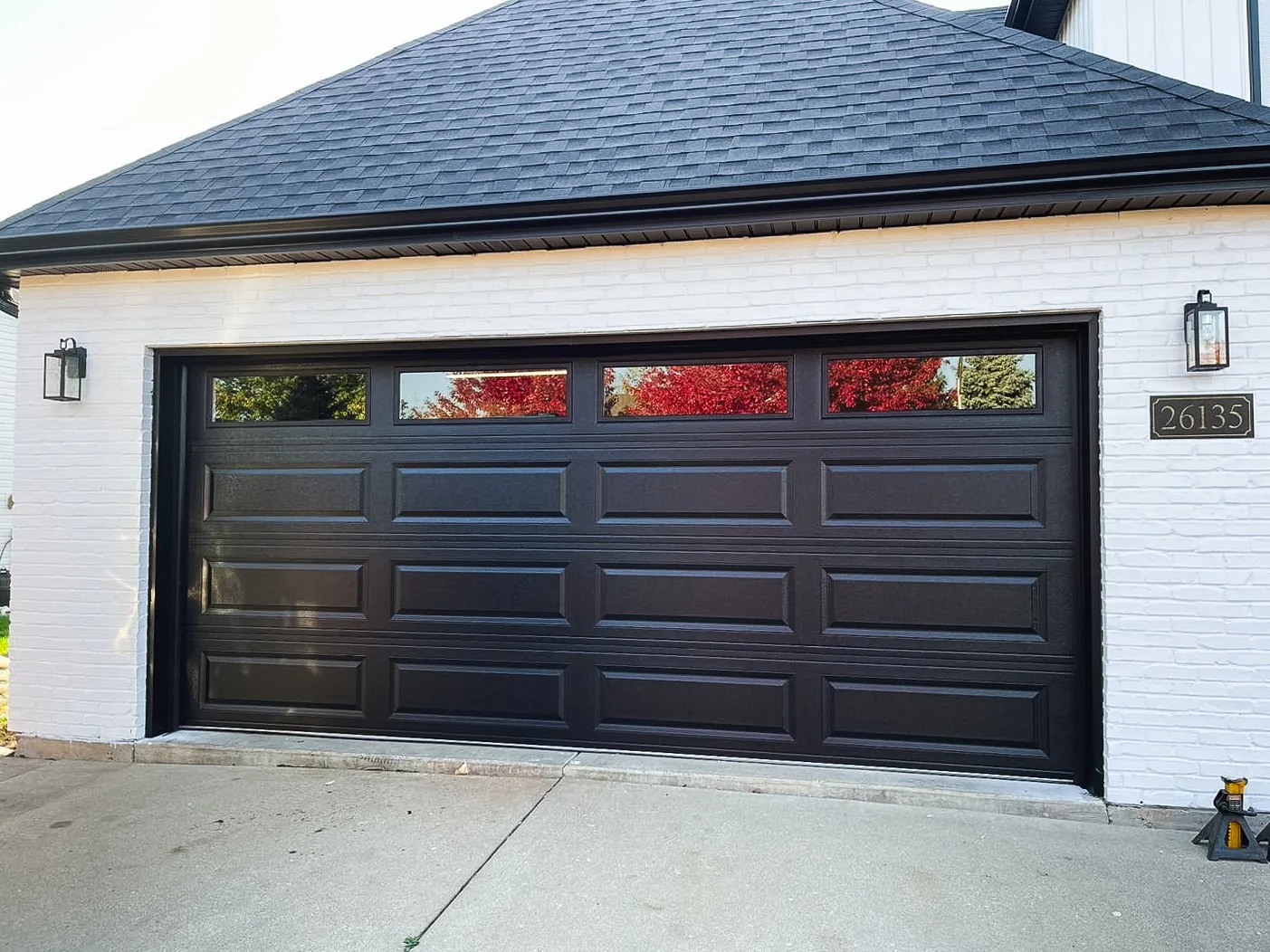
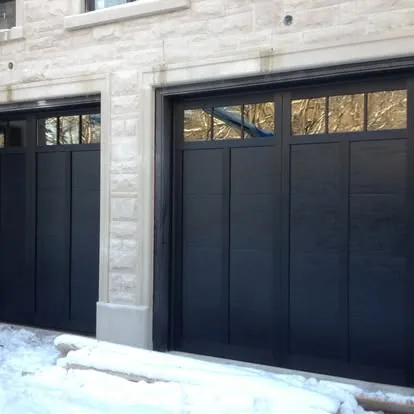
How a sectional door is constructed. A standard residential garage door is 4–5 horizontal sections (panels) stacked and connected by hinges between each section. Each section is typically a steel skin (24-gauge or 25-gauge) with either a hollow back, a vinyl-backed insulation layer, or a full polyurethane-foam core sandwiched between two skins. The bottom section has the rubber weather-seal; the top section has the strut. Damage to one section doesn't compromise the others — the hinges allow each section to be unbolted, lifted out, and replaced independently.
Why the bottom panel is almost always the damaged one. Roughly 70% of panel calls we run in the Atlanta metro are backed-into-by-vehicle damage on the bottom section. The rest split between hail and storm impact (top section, often after a tree-limb strike), water/rust damage on the bottom from poor driveway drainage, and the occasional kid-on-bike or basketball-related dent. Insurance typically covers all of these under your homeowner property-damage clause once the deductible is met.
Match: color, style, gauge, brand. A successful single-panel swap depends on four matches. Brand (Amarr, C.H.I., Wayne Dalton — they don't interchange). Style (raised-panel, flush, ribbed, carriage-house). Gauge (24 vs. 25 vs. insulated). Color (the hardest — manufacturers retire colors every 5–10 years). On a door under 10 years old in an in-production color, all four match cleanly and the replaced section is invisible from the curb. On older doors, the cosmetic compromise is the conversation: accept a slight variance, repaint the whole door, or jump to a full door replacement.
When a full door replacement is the better call. Honest math: if three or more panels are damaged, or the damage is on a 12+ year old door, or the original color is discontinued and a perfect match isn't available, the cost of multi-panel replacement plus labor often gets close enough to a full new door that the new door wins on value — and you'd otherwise be installing new panels onto an aging door with old hinges, old rollers, and old hardware. We model both options in writing on the assessment so you can see the math, not just take our word for it.
Our process. Visit one (assessment): on-site walk-around, damage photos for insurance, weight check, model and color verification, written estimate with both single-panel and full-door options. Visit two (install, after the panel arrives): unhitch the door from the opener, remove the affected section by unbolting hinges from the sections above and below, lift in the new panel, re-bolt hinges, replace any damaged rollers in that section, re-attach the opener, balance-check, and demonstrate. From arrival to handoff on the install visit: typically 60–90 minutes single-panel, 2–3 hours multi-panel.