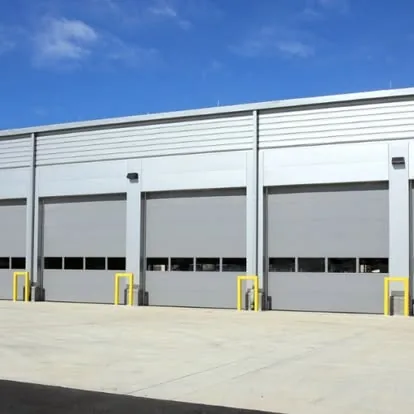
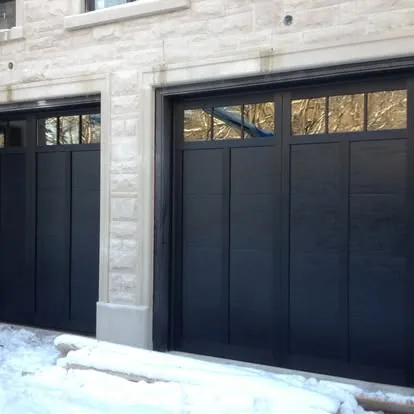
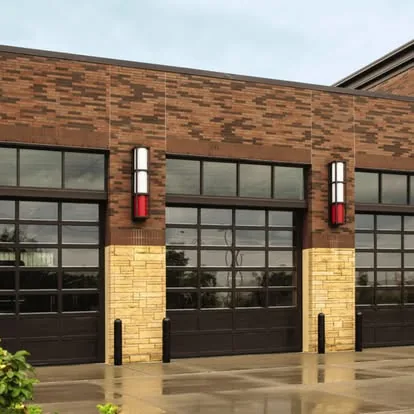
Construction tiers. Three commercial sectional categories: light-commercial (24-gauge steel, used in self-storage and small retail), medium-duty (20-gauge with polystyrene insulation, R-6 to R-12, used in warehouses and fleet bays), and heavy-duty insulated (16–18 gauge with polyurethane-injected core, R-17.5+, used in cold storage, food service, and high-cycle distribution). Wrong tier on a high-cycle door means panels denting from cycle stress, springs burning out at half their life, and opener motors cooking inside two years.
Sizing for cycle count, not just opening width. A 12x12 fleet bay running 60 cycles a day needs different springs and a different operator than a 12x12 self-storage door running 6 cycles a week. Standard 10,000-cycle residential springs on a 60-cycle/day commercial door fail in under a year. Industrial 100,000-cycle springs and a duty-rated jackshaft or gear-head operator pay back inside 18 months on labor avoided alone.
Operator selection. Trolley operators for standard headroom and light cycle, jackshaft operators for low-headroom or high-cycle (mounted on the side of the door, no overhead rail), gear-head operators for heavy-cycle distribution and large doors (18+ feet wide), soft-start/soft-stop variable-speed for warehouses with delicate inventory. We spec to your duty cycle and headroom, not to whatever the supplier has on the truck.
Insulation matters in Atlanta. Most warehouses pay to cool 30–60 foot ceilings — uninsulated sectional doors leak conditioned air at 5–10x the rate of an R-12 polyurethane-core door. For air-conditioned facilities, the spec upgrade pays for itself in two summers. Cold storage and food service: R-17.5+ polyurethane is the only acceptable spec, and the seal package matters more than the door panel.
Our process. Site walkthrough (door count, cycle count, opener inventory, COI requirements). Written quote within one business day. Schedule install around your operating hours — early morning, after-hours, weekends — same hourly rate, no premium. Door + opener + spring set delivered together. Removal of the old door + decking, install + balance + sensor calibration + opener test, then we tag the door with a maintenance sticker so future techs know its cycle history.